How It Works
Custom Jewelry Orders Without the Back and Forth
· 4 min read

If you have ever spent a week going back and forth with a customer over a custom piece, you know the pain. They send a blurry photo from Pinterest. You sketch something. They want changes. You redraw. They want to see it in a different metal. Another round of messages. As Clientbook notes, multiple revisions during the design process increase both costs and delays considerably.
By the time you actually start making the piece, you have spent hours just getting to "yes." That is time you are not billing for. We wrote about this in detail in our post on the real cost of custom jewelry design.
The Old Way vs. What Changes
The traditional custom order process has too many steps where things stall. The customer cannot picture what you are describing. You cannot picture what they are describing. Someone has to translate the idea into something visual, and that usually means a hand sketch or a CAD mockup that takes days.
With Diamra on your site, the customer does that translation themselves. They type what they want, see it on screen, adjust it until it looks right, and send it to you. When the order arrives, you already have a reference image, a materials breakdown, and a price the customer has agreed to. You can learn more about how this works and why it matters.
What Arrives in Your Dashboard?
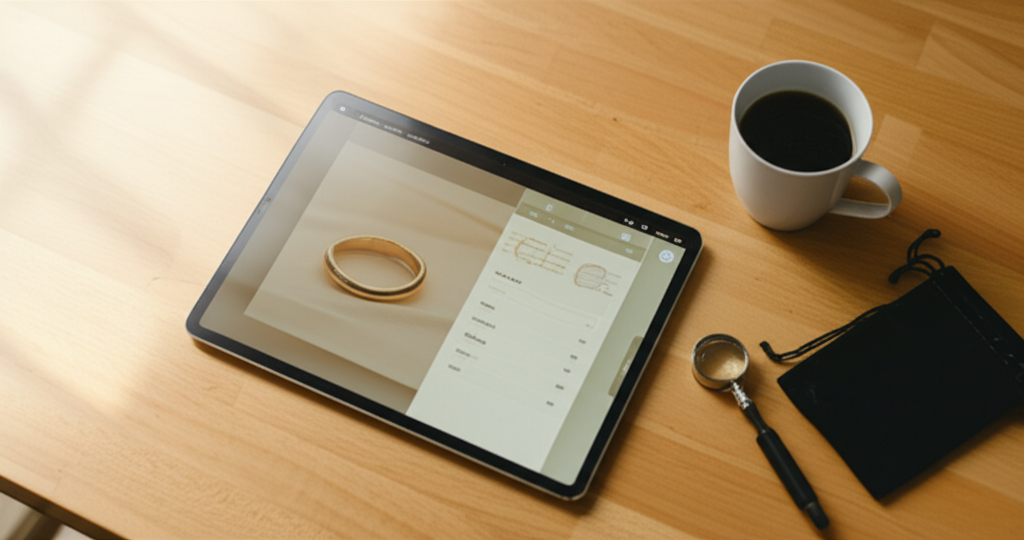
A complete order with everything you need to evaluate it: the AI-generated concept image, the customer's full text description, the selected materials (metal type, stone types and sizes), the estimated price including your markup, and the customer's name and contact information.
You can accept the order, request a modification, or message the customer directly. If the design needs a tweak that the AI could not handle, you and the customer can work it out from a shared starting point instead of a blank page.
Why Does a Shared Image Cut Communication in Half?
Most back-and-forth in custom orders comes from misalignment. The customer has one picture in their head, and you have another. Every round of communication tries to close that gap. National Jeweler recommends "overcommunication" as the solution, but that adds more hours to every order.
When both of you are looking at the same image from the start, you skip most of those rounds. The customer already knows what the piece will look like and what it will cost. Your job is to confirm feasibility and start making it. Research shows that 22% of custom jewelry customers abandon orders when wait times exceed four weeks. A shared visual removes that barrier before the wait even starts.
Can You Handle More Custom Orders Without More Staff?
Yes. The design tool handles the part that used to eat your hours: turning a vague idea into something visual. AI-assisted CAD software reduces the jewelry design cycle by 40%, which means more orders through the same team.
You still do what you do best. The difference is that customers come to you with clear expectations, and you spend your time at the bench instead of in your inbox. See the full details on the pricing page.