
For Store Owners
The Real Cost of Custom Jewelry: Time Spent Before the Bench
· 5 min read
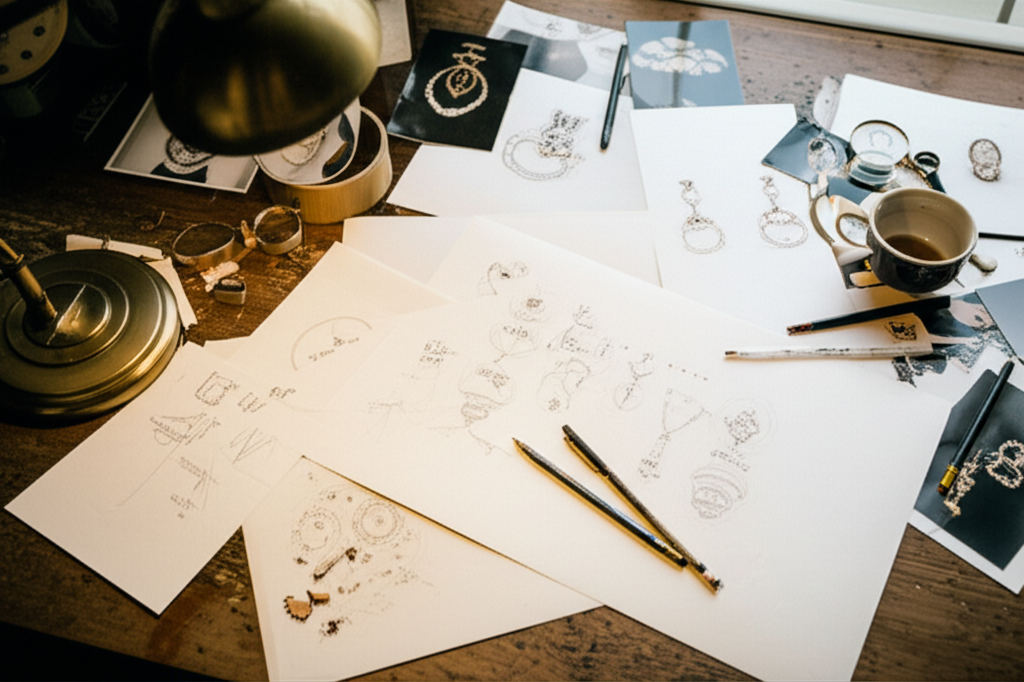
A customer walks into your store with an idea. Maybe they saw a ring on Instagram. Maybe they want something for an anniversary and only know they want "something with sapphires." The conversation starts, and it sounds promising. But between that first conversation and the moment you actually start working at the bench, weeks can pass.
Custom jewelry is the most rewarding work a jeweler can do. It is also the most time-consuming, and not for the reasons you might expect. The craftsmanship itself is not the bottleneck. The back-and-forth is.
The Way It Has Always Worked
The process usually goes something like this. The customer describes what they want. You take notes, maybe make a rough sketch on the spot. Then you go back to your desk, draw something more detailed or open your CAD software, and send the customer a rendering or a photo of the sketch. The CAD drawing phase is the most time-consuming part of the entire design process.
"Can you make the band thinner?" "What would it look like in rose gold?" "Actually, can we try a pear-shaped stone instead?" Each change means another round of drawing, another email, another few days of waiting. As National Jeweler notes, success in custom design requires "overcommunication" and written contracts specifying timelines and revision policies.
After three or four rounds, you land on a design they like. Then comes the pricing conversation. "That is more than I expected. What if we go with a smaller stone?" Back to the drawing board. Another round.
By the time both sides agree on the design and the price, you might be six weeks into the project. And you have not touched a piece of metal yet.
Where Do the Hours Actually Go?
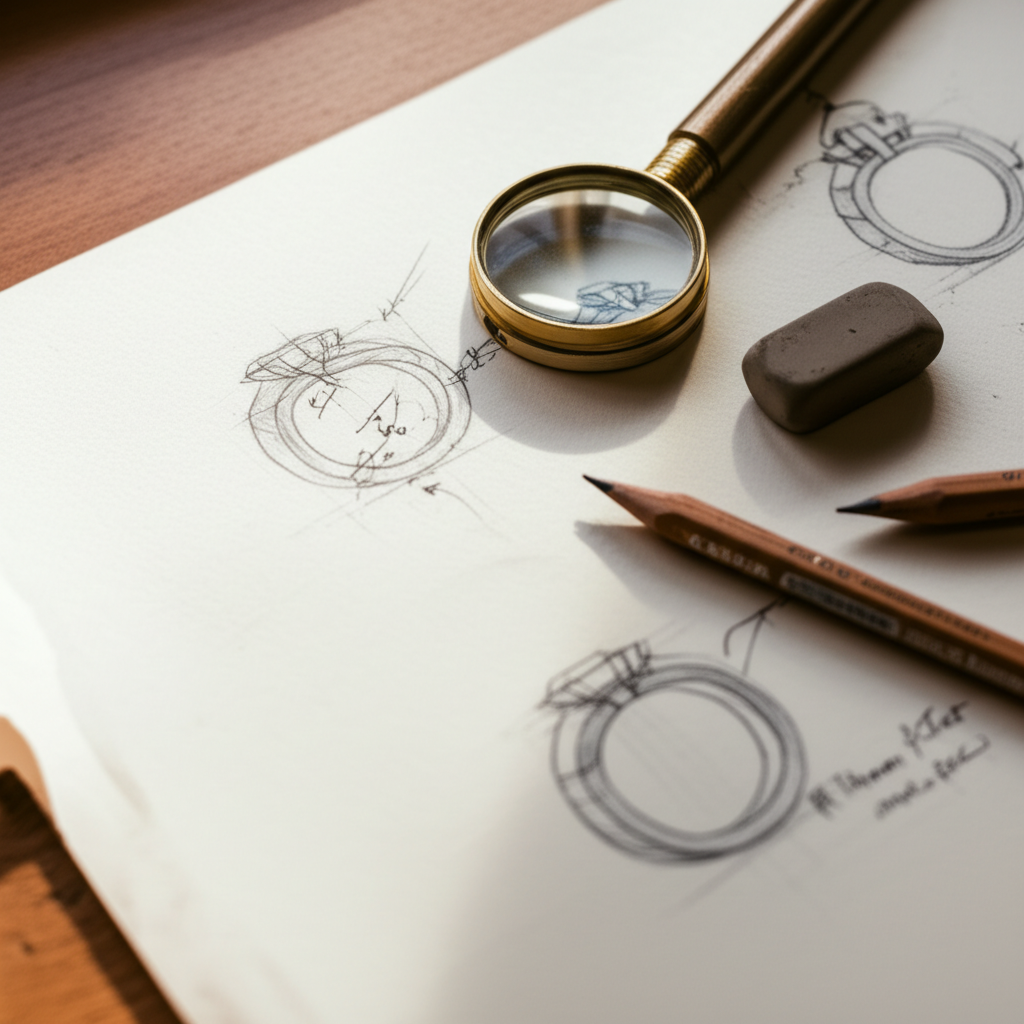
In a typical custom jewelry order, the design phase takes longer than fabrication. Benchwork, casting, setting, and polishing might take a few days to a couple of weeks. But getting from "I have an idea" to "yes, make that" routinely takes four to six weeks of revisions, emails, and re-drawings.
It is not anyone's fault. Customers are not designers. They cannot sketch what is in their head. They rely on you to interpret their words, and words are imprecise when it comes to visual things. "Elegant" means different things to different people. "Not too flashy" is not a spec.
So you guess, you draw, they react, and you start over. It is the nature of the work. But as we covered in our post on faster custom jewelry workflows, it does not have to be.
Why Do Customers Drop Off Before Ordering?
The core problem is simple. The customer has a picture in their head, and you do not. Everything that happens before the bench is an attempt to get that picture out of their head and into yours. When that process takes too long, customers walk away.
Sketches help. So do reference photos and CAD renderings. But each of those takes time, and the customer has to wait between each round to see if you got closer to what they meant. According to a 2025 custom jewelry market report, roughly 45% of potential customers avoid custom jewelry entirely because of the perceived cost and complexity of the process.
Some customers give up. They lose patience with the process or feel like they are being difficult by asking for changes. Others never start at all. They hear "custom" and assume it will take months and cost a fortune. The friction is real, and it costs you orders.
An iPad on the Counter
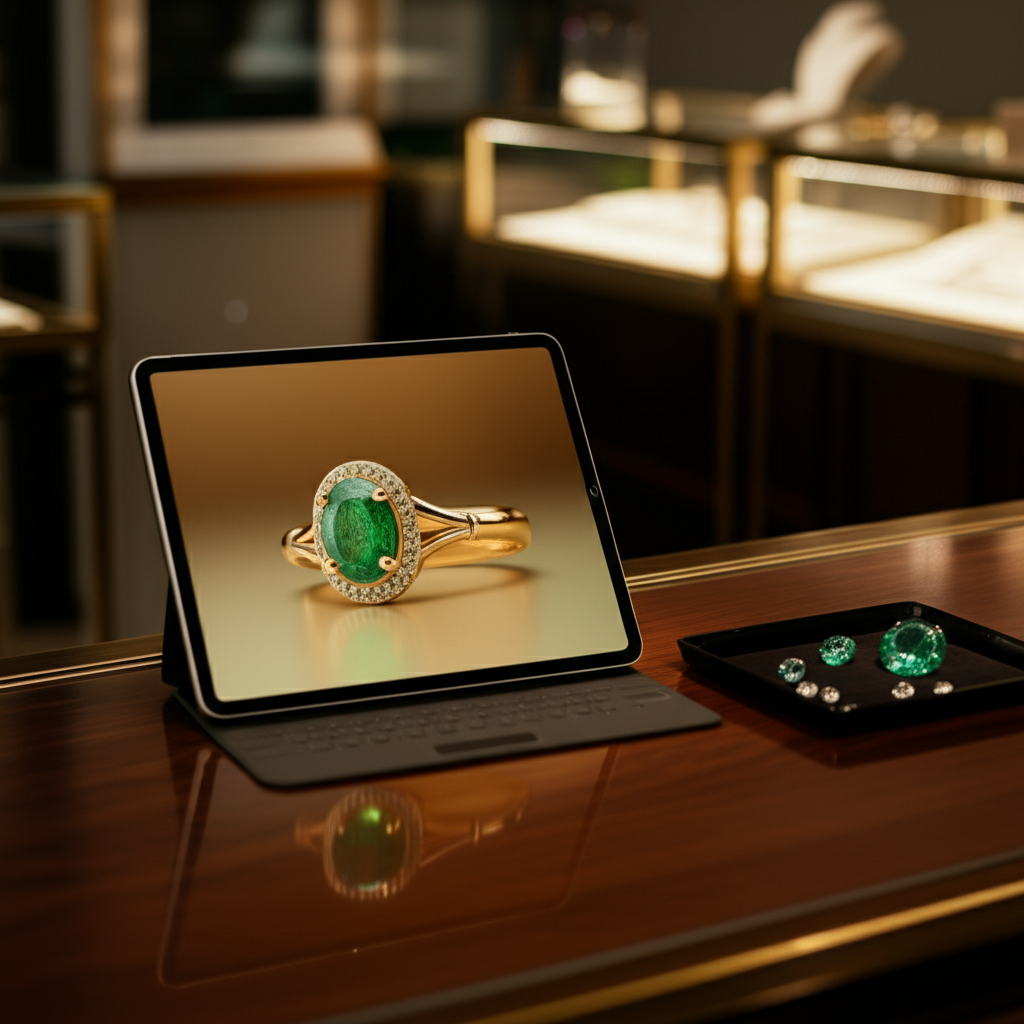
Now picture this instead. A customer walks in and sits down at an iPad on your counter. Or they are at home on their phone, visiting your website. They type what they want: "yellow gold ring, oval emerald, thin band, vintage feel." In seconds, they see a rendered image of that design on screen.
It is not perfect yet. They type "make the setting lower" and see a new version. "Add small diamonds on the sides." Another image. They keep adjusting until the picture on screen matches the picture in their head.
When they are happy, they tap a button. The design, the image, the materials, and a price estimate all land in your dashboard. You can see the full breakdown on the pricing page.
That entire process, the part that used to take weeks of emails and sketches, just happened in ten minutes. And the customer did it themselves.
Your Craftsmen Focus on Craftsmanship
This is the part that matters most. When an order comes in through Diamra, you are not starting from a vague description. You have a clear image, a materials breakdown, and a customer who has already agreed to a price.
Your job becomes what it should have been all along: making the piece. Evaluating the design for feasibility, sourcing the stones, doing the work at the bench. The long, uncertain design phase is already behind you. Early data from AI-assisted design tools in the jewelry industry shows a 65% reduction in design time for jewelers who adopt them.
You take on more custom work without hiring anyone to manage intake. And your craftsmen stay at the bench instead of in their inbox.
The weeks of back-and-forth were never about quality. Removing them does not change what you make. It changes how fast you get started.