For Store Owners
Are You Still Using ChatGPT to Create Jewelry Designs? That Is Already Out of Date.
· 5 min read
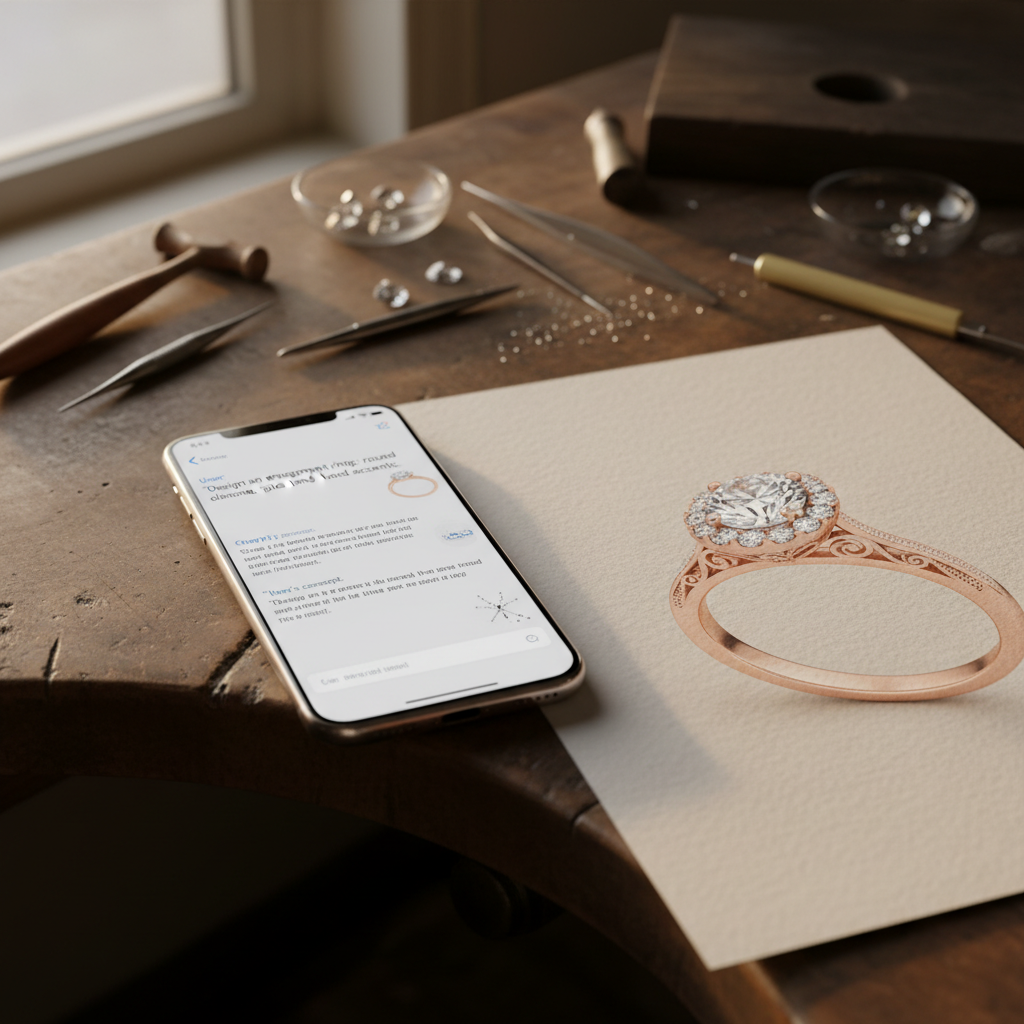
People are using ChatGPT for jewelry concepts now. It can generate images, brainstorm ideas, and produce visual inspiration in seconds. For a jeweler exploring a design direction, that can be genuinely useful.
But generating an image is not the same as running a custom business. The real challenge in jewelry is not creating a pretty picture. It is turning customer interest into a finished piece, paid for and delivered.
Why Is Image Generation Only the Easy Part?
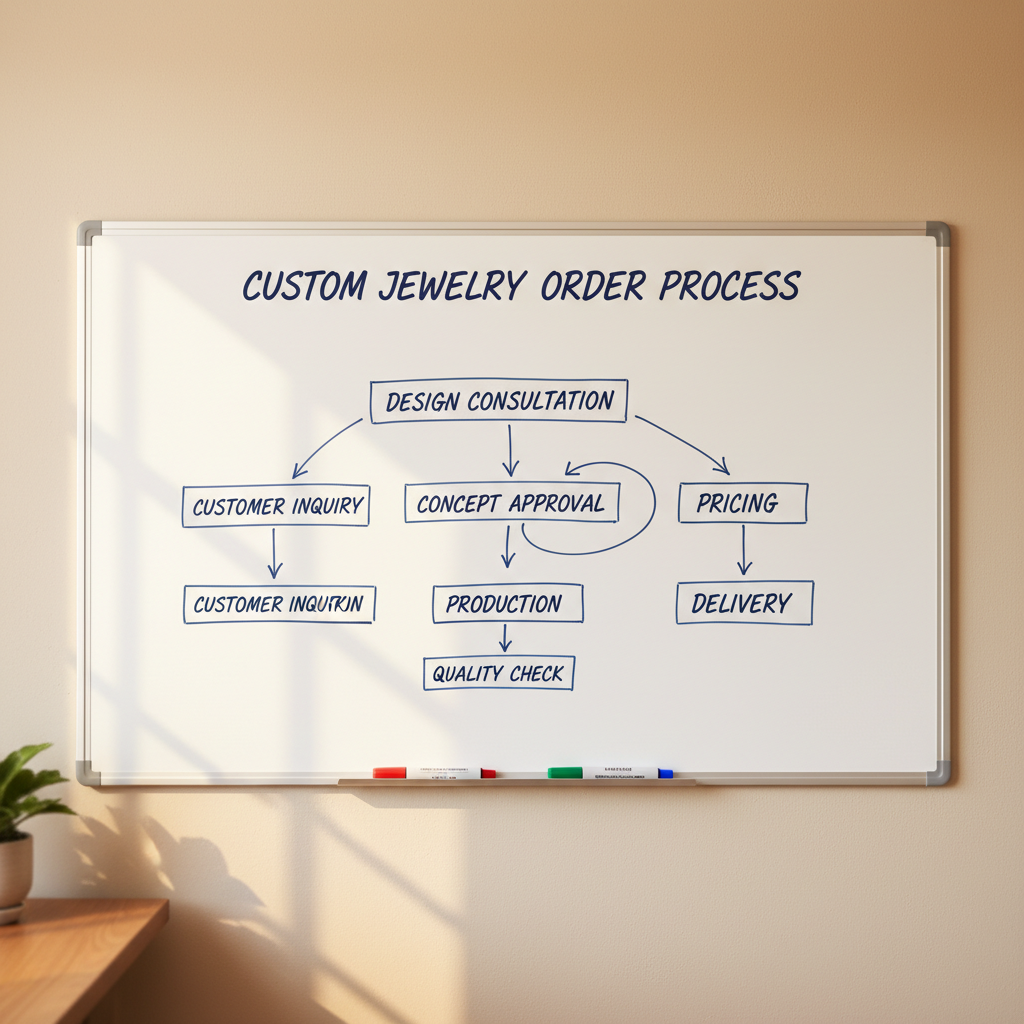
Because everything that matters happens after the image. You still need to turn interest into a consultation, keep momentum when the customer is ready to move, and track what was requested, changed, and needs follow-up. The CAD phase alone is the most time-consuming part of the design process, and ChatGPT does nothing to manage it.
The image needs to reflect your brand and what your shop can actually produce. And someone has to quote materials, manage pricing, and move the order forward. ChatGPT gives you an image and leaves you to figure out the rest.
Generic Output Is Not Store-Specific Selling
One of the biggest gaps with generic AI is that it is not shaped around your store. It does not know your collections, your signature design language, the types of pieces you want to offer, or how your business approaches custom.
A customer using ChatGPT might generate an image of something your shop cannot make, or would never want to make. The image looks great on screen but has no connection to your pricing, your materials, or your production capabilities. We wrote about how this plays out at the counter in our post on what happens when a customer walks in with an AI image.
For the customer, that creates a disconnect. They walk in with an expectation that was set by a tool that knows nothing about your business.
Why Is Inspiration Without Infrastructure a Dead End?
Using ChatGPT for jewelry images is like sketching ideas on a napkin. Useful at the start, but not the system you build a business on. Custom jewelry achieves margins that can exceed 70% for bespoke designs, but capturing that margin requires a connected workflow, not a collection of screenshots.
A jeweler who relies on generic AI still needs separate tools for lead capture, pricing, order tracking, and customer communication. That is a lot of manual work holding together a process that should be connected. The real cost of custom jewelry is in time spent on intake, not time spent at the bench.
Generating more AI images does not grow custom revenue. A connected process that takes a customer from inspiration to order does.
Where Does Jewelry AI Actually Matter?
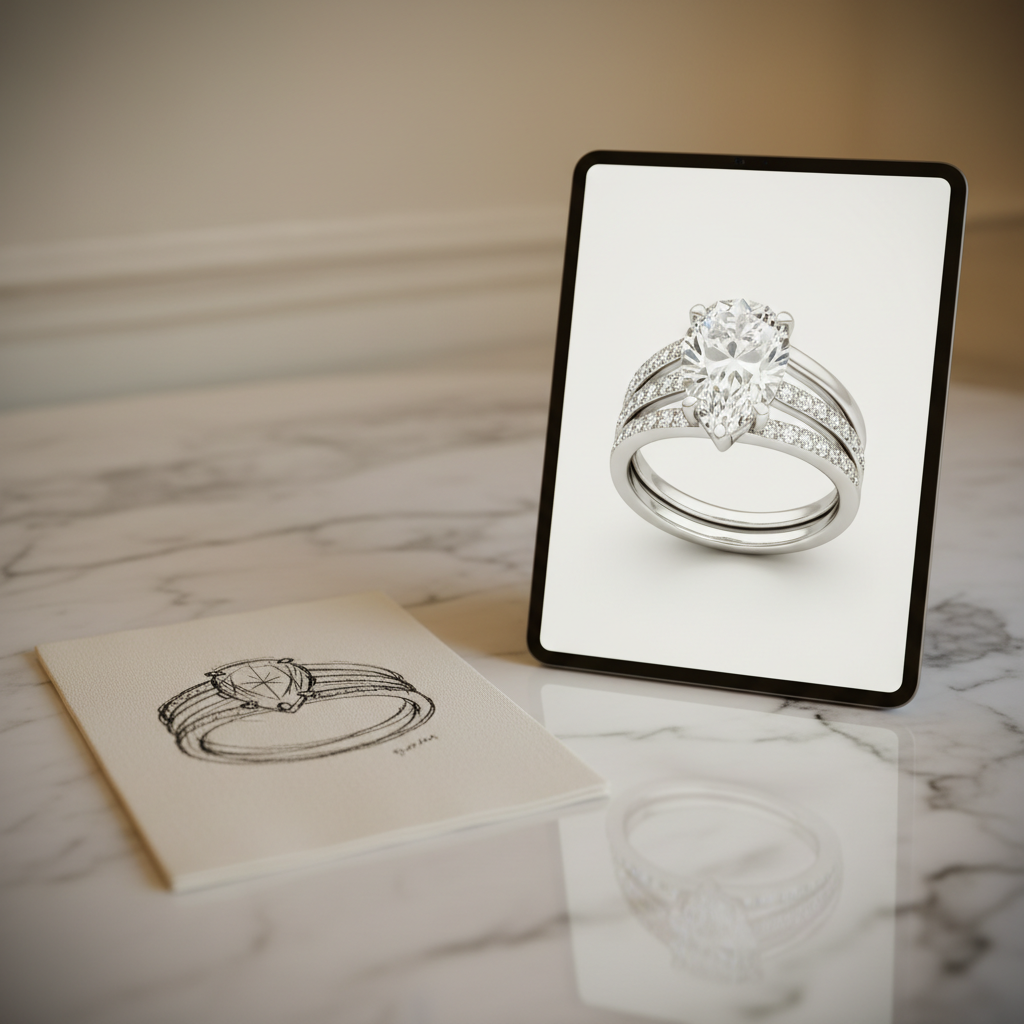
The value of AI in jewelry is in what happens between the image and the finished piece: faster engagement, brand-specific design, and a workflow that keeps the project moving. As GIA notes, AI is better suited for generating new ideas than perfecting existing designs, and "has no concept of what can actually be manufactured." The value comes from embedding AI into a workflow, not using it standalone.
That is a very different product than a general-purpose chatbot stretched into a role it was never built for. See how Diamra approaches this differently, or check the pricing to get started.