For Store Owners
Your Customer Walks In With a ChatGPT or Pinterest Image. Now What?
· 4 min read

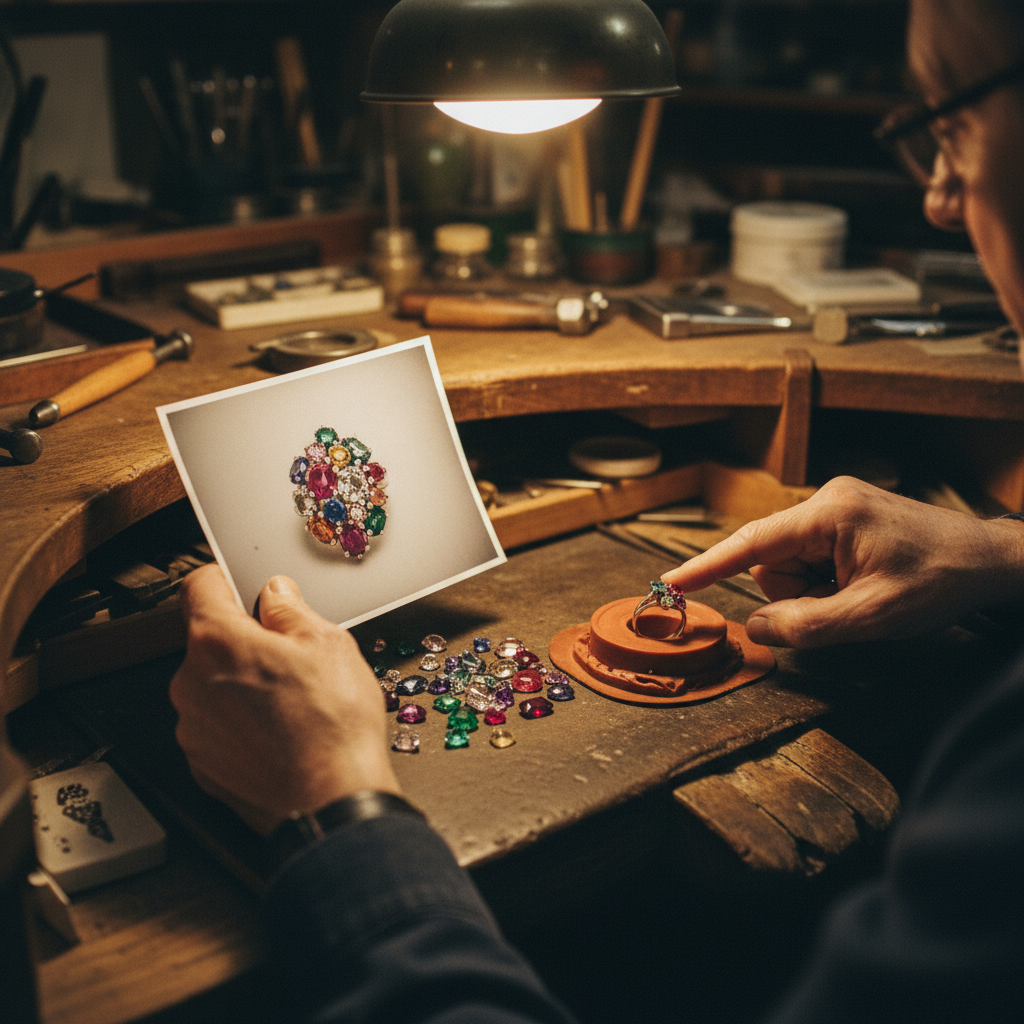
Today's customer does not walk into your store empty-handed. They come with a ChatGPT image, a Pinterest board, an Instagram screenshot, or a photo of a ring they saw on someone's hand at a wedding.
That image is a gift. It means they have already done the hardest part of the custom process: deciding they want something specific. The question is what happens next.
Where Do Most Stores Lose the Sale?
In most stores, the next step is a conversation. The jeweler asks a few questions, takes some notes, and promises to follow up. Maybe they sketch something. Maybe they say they will send over some options next week.
The customer leaves without seeing anything concrete. No design concept. No sense of price. No clear path from "I like this" to "make this for me." 69% of engagement ring buyers want customized settings, but many never start because the process feels too complicated.
That gap between showing up excited and walking out uncertain is where custom orders die. Not because the customer changed their mind, but because the process gave them nothing to hold onto.
An Inspiration Image Is Not a Brief
A Pinterest screenshot tells you what aesthetic a customer is drawn to. It does not tell you what metal they want, what their budget is, or how closely they expect the final piece to match the photo.
A ChatGPT-generated image might look stunning, but it may depict a design that is physically impossible to manufacture. The setting might not work. The proportions might be off. The customer does not know that, and it is not their job to. We wrote more about this gap in our post on why ChatGPT is not a jewelry platform.
The jeweler's job is to take that inspiration and turn it into something feasible and priced. That is where your expertise matters.
How Do You Keep Their Momentum Going?
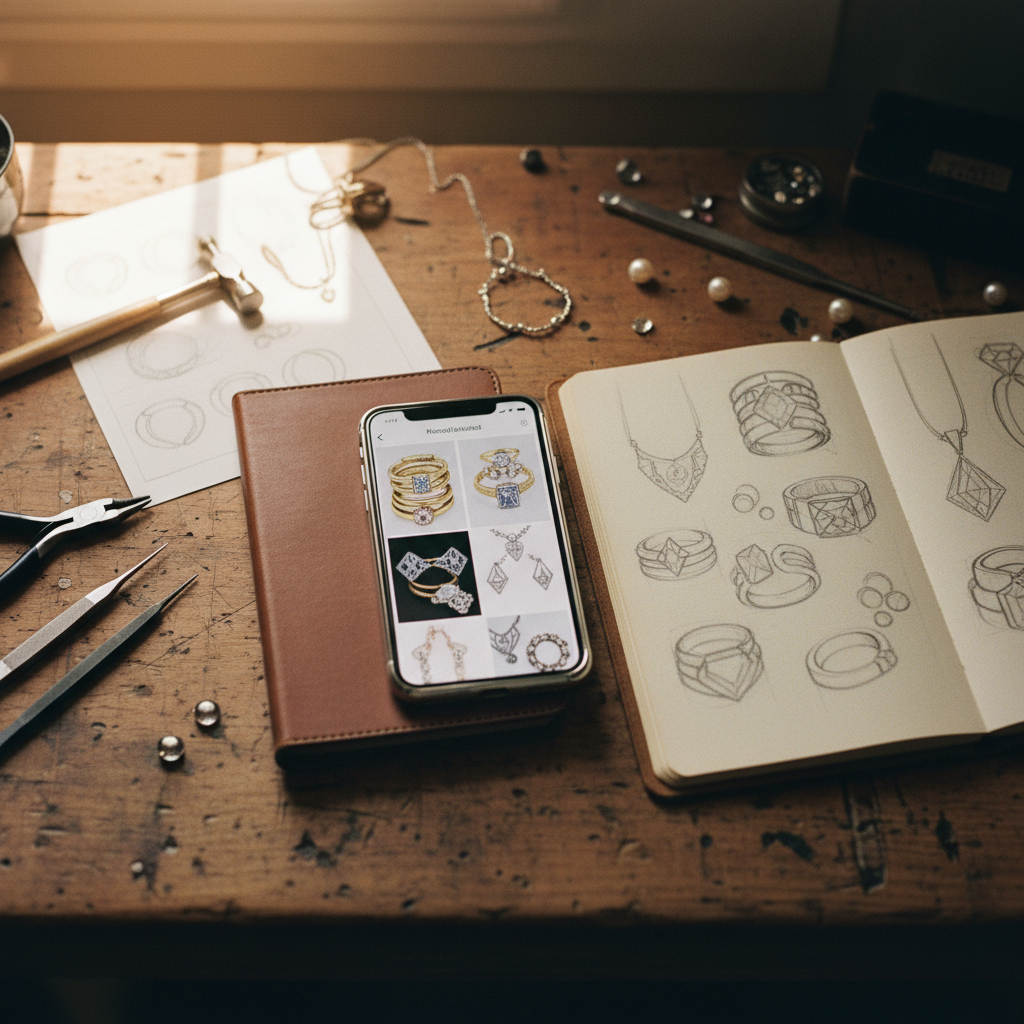
Show them a version of their idea that is grounded in reality. Not a final rendering. Not a CAD model. Just a visual concept with a price. Jewelry shoppers are 40% more likely to purchase after seeing a visual preview, and 73% willing to pay premiums for brands with transparent pricing.
When the customer can see a concept and a price estimate in the same visit, the conversation changes completely. Instead of "we will get back to you," it becomes "what do you think of this? Want to adjust anything?"
That shift keeps the energy alive. The customer has a reason to stay and refine instead of walking out with a "we will be in touch."
The Reference Image Is the Starting Line
Think of the customer's image as the starting line, not the finish line. It tells you the direction. Your job is to show them how far they can go in that direction, given the materials, the budget, and what your shop can produce. As GIA notes, AI is well suited for generating new design ideas quickly, but is no substitute for a trained designer when it comes to what can actually be manufactured.
When you treat that first image as the beginning of a structured process rather than a vague conversation, everything moves faster. The customer knows what to expect. You waste less time on back-and-forth. And the sale closes sooner. You can add your store and start converting these walk-ins today.