How It Works
Why Independent Jewelers Need More Than a Ring Builder
· 5 min read
For many independent jewelers, a ring builder feels like a step forward. It looks modern. It gives customers something to click through. Compared to a static inquiry form, it can feel like real progress.
But for a store trying to grow actual custom sales, a ring builder is usually not enough. A ring builder is a narrow tool. It helps a customer configure a limited set of options inside a template. It does not help the store run the broader workflow that drives consultations, conversions, and order flow.
What a Ring Builder Does Well
Ring builders solve one problem well. They make the online experience more interactive than a basic inquiry form. Jewelry stores using ring builders typically see conversion rates jump 30 to 40% compared to regular product pages. For standard engagement ring shopping, that is real value.
But that value has limits. A ring builder only covers a narrow slice of what independent jewelers actually sell.
Why Is Template-Based Customization Not Truly Custom?
A ring builder is built around templates. The customer is not entering a true custom experience. They are choosing among a fixed set of configurations that the tool allows. As one industry comparison notes, some builders "lock you into their predetermined choices," and template-based approaches mean "your builder may look similar to competitors using the same app."
That may work for a narrow product category. But it breaks down when the jeweler wants to offer something more personal, more brand-specific, or more connected to how their shop actually works.
Most ring builders do not help with lead generation, customer follow-up, or order management. The front end may look interactive, but the business behind it stays fragmented. We wrote about what a complete design studio looks like in a separate post.
What Is the Difference Between a Feature and a Platform?
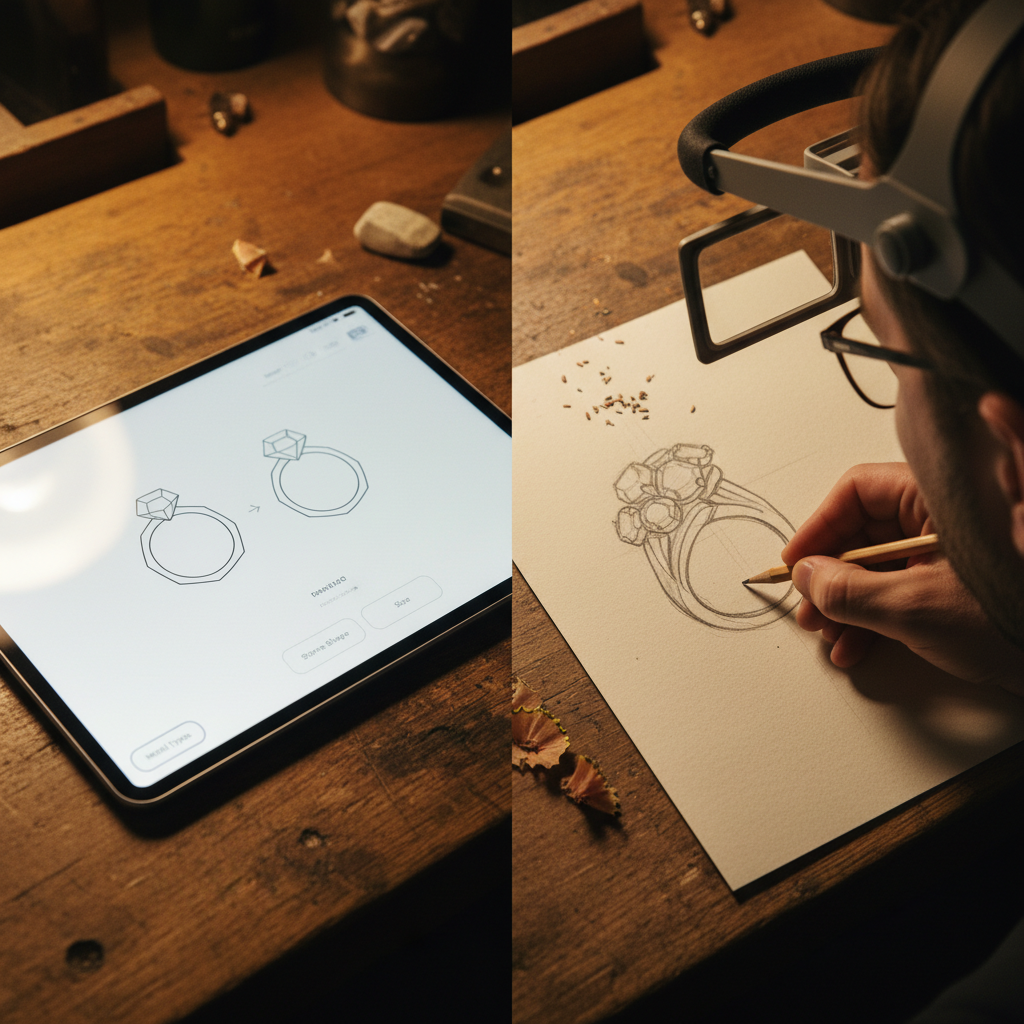
A ring builder helps the customer configure. A full platform helps the jeweler sell, manage, and deliver. Custom jewelry achieves margins that can exceed 70% for branded and custom designs, but capturing that margin requires more than a configurator widget.
That difference matters most for independent jewelers because they do not have extra staff or extra time to patch together multiple systems. They need one system that takes a customer from first description to placed order.
A larger retailer may be able to layer multiple tools together. Most independent stores cannot afford five separate subscriptions for traffic, ring building, CAD coordination, follow-up, and order tracking. That fragmentation costs money and loses customers between the cracks.
Do More Clicks Actually Mean More Sales?
No. One of the biggest misconceptions in jewelry technology is that giving the customer more clicks automatically creates more sales.
What creates sales is a better process. One that starts fast, feels like your brand, and moves naturally from interest to placed order. Configurators with personalization drive 40% higher cart value, but only when they connect to the full sales process.
A ring builder may improve the front end slightly. But real growth in custom revenue comes from improving the full process, from the first click to the finished piece. See the details on the pricing page.