
For Store Owners
White Label Jewelry: What It Means and How It Works
· 6 min read
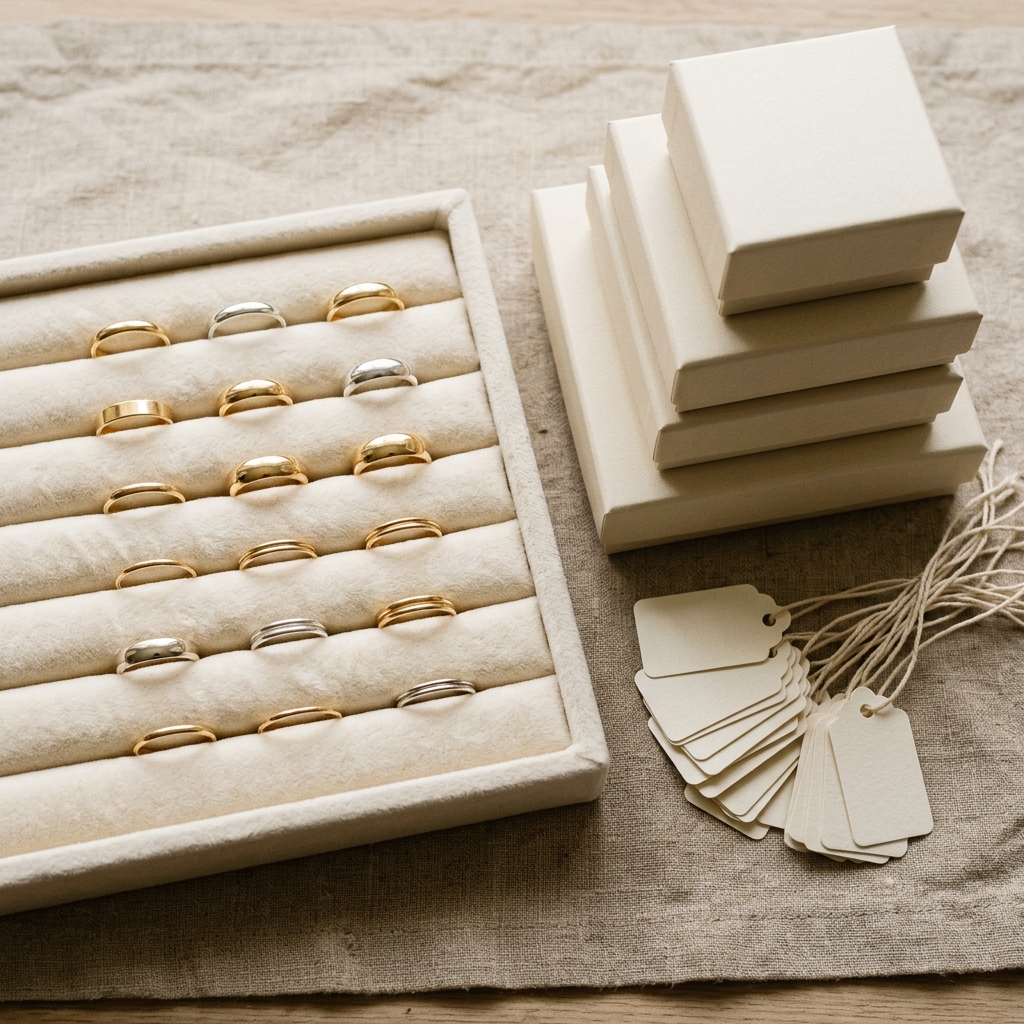
White label jewelry is how a lot of small brands get their first collection: someone else already makes the pieces, and you put your name on them. It is a real model with real economics, and it is also the phrase people use for three different arrangements that carry very different risks.
This post separates them, is honest about what each costs, covers the disclosure rules that still apply when the piece has your name on it, and ends with the option that did not exist a few years ago: selling under your own brand without buying inventory at all.
What Is White Label Jewelry?
White label jewelry is jewelry a manufacturer already produces, sold under a retailer's brand. You choose from an existing catalog, add your own tags and packaging, and sell it as yours. The pieces are not exclusive to you, so another brand can sell the same design under a different name.
Private label sits one step further. The manufacturer produces to your specifications, so you control metal, stones, and finish, and the design is exclusive to you. That exclusivity costs more up front, because exclusive designs mean molds, prototypes, and a larger commitment before a single sale.
The practical difference is inventory risk. White label lets you test a category with a small order. Private label protects your margin because customers cannot price-shop your exact piece elsewhere, but it asks you to fund a design and a production run in advance.
What White Label Jewelry Actually Costs
The sticker price is not the cost. Every white label arrangement carries a minimum order, so a collection means capital tied up in pieces before anyone has bought one, and the pieces that do not sell are the ones that quietly set your real margin.
The pricing floor is also under pressure. Average engagement ring spend fell to $4,600 in 2025 as lab-grown stones took 61% of center-stone choices. When a customer can find a visually identical stock piece from three sellers, the only lever left is price, and a white label catalog is by definition a piece other people can also sell.
That is the strategic trap. The model that makes launching easy makes differentiating hard, and it is the reason many stores use white label as an entry point rather than a destination.

What You Still Owe the Customer
Putting your name on someone else's manufacturing does not transfer the disclosure obligations to the factory. Under the FTC Jewelry Guides, the seller is responsible for telling customers what they are buying, at every level of trade, before the purchase.
Treatments are the clearest example. The guides state that when a gemstone treatment is not permanent, requires special care, or significantly affects value, the seller should disclose the treatment and its care requirements, and for online and catalog sales that disclosure has to appear in the product description itself. The same principle governs metal content and how you may describe a laboratory-created stone.
Practically, this means your supplier documentation is part of your product. If you cannot say what the metal is, how the stone was created, and what was done to it, you are not ready to sell the piece under your name.
The Made-to-Order Alternative
There is a third model that avoids both the inventory and the sameness: sell nothing until it is designed, then have it made. The customer designs a piece with you, approves it, and only then does anyone commit metal to it. Your brand is on the experience and the finished piece, with no catalog of unsold stock behind it.
This is now practical because production got flexible. A castable pattern can be printed in a night, and Formlabs notes shops can produce high-quality patterns within 24 hours, which we walked through in how 3D printed jewelry is made. The demand side agrees: De Beers' 2026 research found buyers increasingly want distinct pieces that feel personal, and retailers told JCK that custom work is carrying 2026.
The missing piece used to be the storefront. That is the white label idea applied to software instead of inventory: Diamra gives a store its own branded site with a design studio built in, so customers design under your name and Diamra stays invisible. We covered the front of that flow in how AI jewelry design works and the making of it through our production network. If you want to see it under your own name, set up a store and design a piece the way a customer would.