
For Store Owners
AI Jewelry Design: How It Works and What It Changes for Stores
· 6 min read
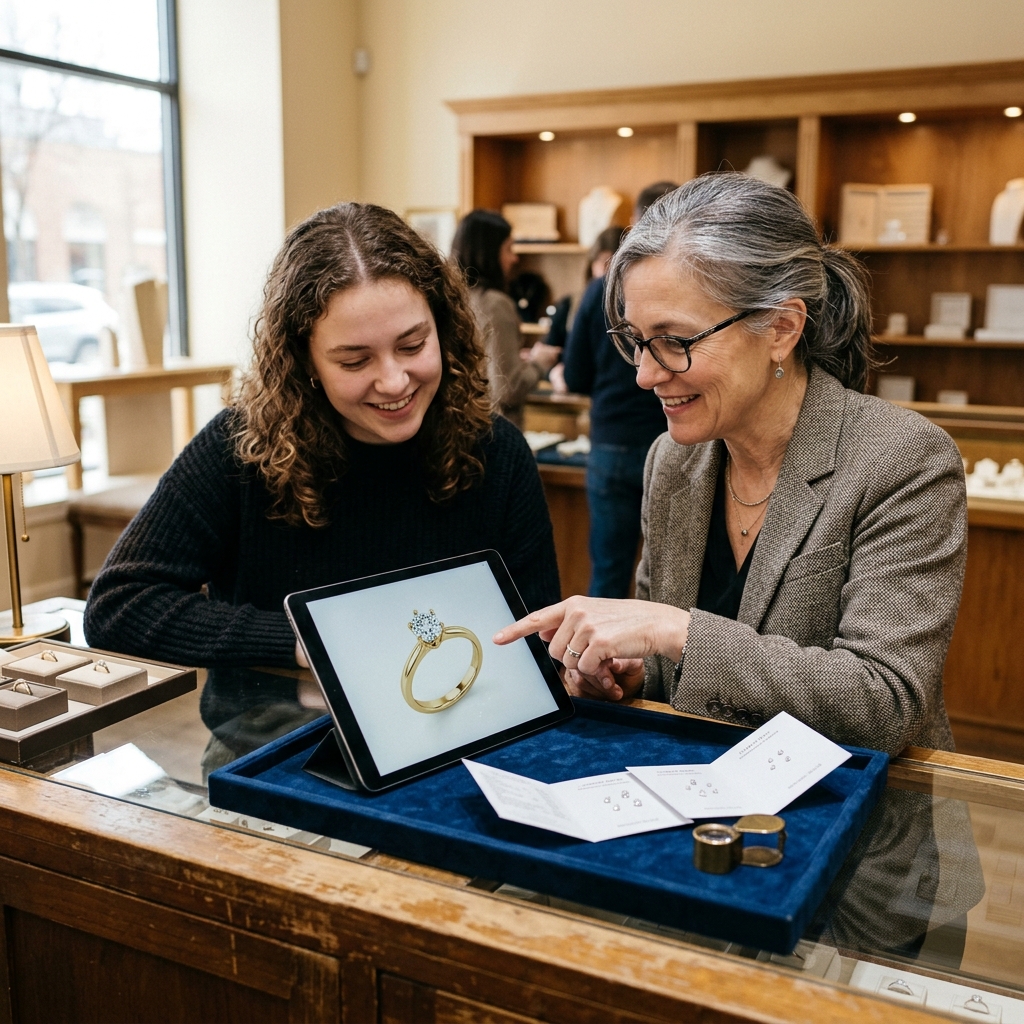
A customer sits at your counter and tries to describe a ring she has pictured for months. AI jewelry design closes the gap between her words and something she can actually see: she describes the piece, and a realistic rendered concept appears in front of her in seconds. No sketch pad, no second appointment.
This is not a lab experiment anymore. Jewelers already use AI for product renders, marketing copy, and back-office work, and customers already walk in holding AI images they made at home. We wrote about that moment in what to do when a customer arrives with a ChatGPT image. The open question for a store owner is practical: how does this technology become custom orders?
What Is AI Jewelry Design?
AI jewelry design is the use of image-generating models to turn a written description, a sketch, or a reference photo into a realistic picture of a jewelry piece. Instead of waiting days for a hand sketch or a CAD model, a customer sees a rendered concept of their idea in under a minute.
The difference between a purpose-built tool and a general image app is control. A generic generator will happily draw a prong that cannot hold a stone or a band that could never be cast. Software built for jewelry keeps the output inside what a bench can make: real metals, real cuts, proportions a caster can work with. We covered that gap in detail in why ChatGPT is not a jewelry platform.
The industry has stopped treating this as a curiosity. At a recent CIBJO congress panel, experts told JCK they expect AI to reach everything from diamond grading to sales management, with lower costs and better margins as the draw for retailers.
How Does an AI Jewelry Generator Work?
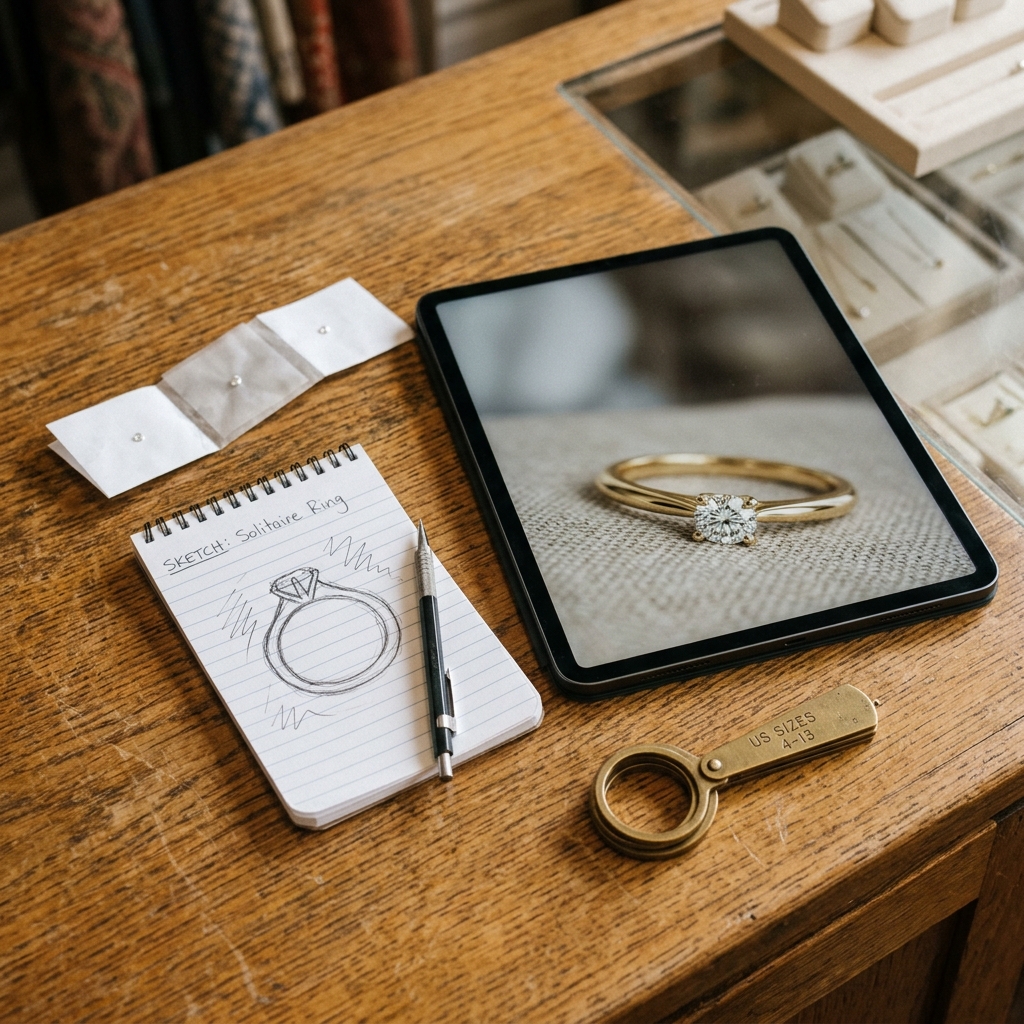
An AI jewelry generator follows four steps. The customer describes the piece or uploads a reference. The system renders concept images. The customer refines the design until it matches what they imagined. The store then receives the approved concept as a qualified order, together with a material and price estimate.
The refinement loop is where sales happen. A thinner band, yellow gold instead of white, smaller side stones: each change takes seconds instead of another appointment. The customer stays inside the moment of wanting the piece, and by the time they approve a concept they have already invested in it.
On a Diamra storefront this loop runs under the store's own brand, with the store's metals, stones, and markup wired in, so the estimate the customer sees is the store's real price. The full toolset is on the why Diamra page.
What AI Changes for a Jewelry Store
The economics of the counter are shifting. Engagement ring spending fell to an average of $4,600 in 2025, with lab-grown stones taking 61% of center-stone choices, down from $5,200 in The Knot's 2024 study. When the stone itself gets cheaper, the experience around it has to carry more of the value.
Custom work is the counterweight. A store cannot win a race to the bottom against online lab-grown listings, but it can sell what no listing has: a piece designed at the counter for the person standing there. What changed is the cost of showing that person their piece. We walk through the practice in giving customers a way to design their own jewelry and why a ring builder is not enough.
The productivity math holds outside jewelry too. Deloitte's State of AI in the Enterprise research finds two thirds of companies report productivity gains from AI, but only a third have changed how their business actually runs. For a jewelry store the return sits in that second group: a different way for custom orders to start, not faster marketing captions.
What Is the Best AI for Jewelry Design?
The best AI for jewelry design depends on what happens after the image. A store needs four things: renders that respect manufacturability, faithful edits instead of loose variations, a built-in price estimate, and a path from approved concept to a real order. A pretty picture with none of those is a dead end.
One more shift is worth planning for. Buyers increasingly research through AI assistants instead of classic search, and National Jeweler now advises jewelers to publish content that answers real customer questions so their stores show up in those answers. A design tool that lives on your own branded site feeds exactly that kind of presence.
If you want to see the experience under your own name, you can set up a store and try the design flow the way a customer would. Stores that put a design tool on the counter are not replacing the jeweler. They are giving the jeweler a faster way to say "yes, we can make that."