For Store Owners
3D Printed Jewelry: How a Design Becomes a Real Piece
· 6 min read
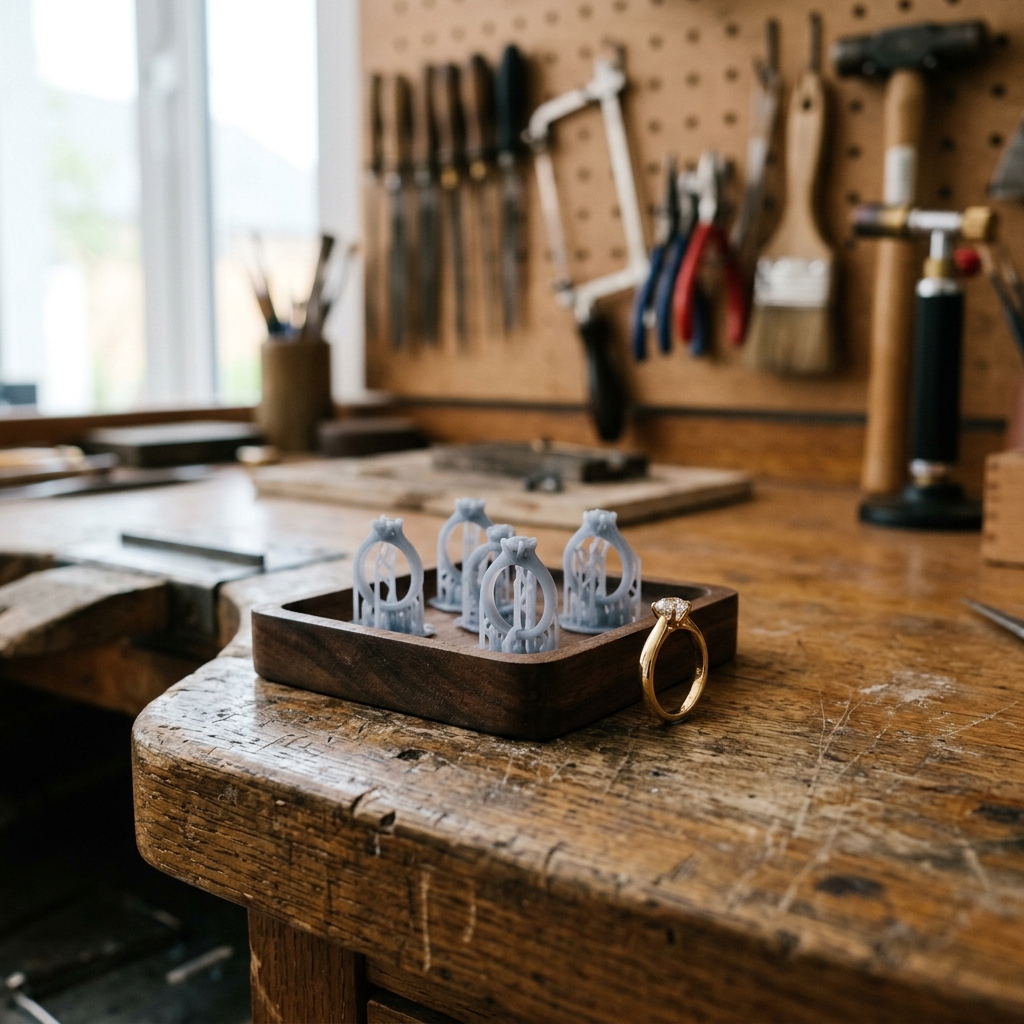
The most common misunderstanding about 3D printed jewelry is that the printer makes the ring. It almost never does. The printer makes a pattern, and that pattern is burned away to leave a cavity that molten gold fills.
Once that clicks, the rest of the process makes sense, including why a printed piece can hold detail no hand-carved wax could, and why a store can now offer custom work without owning a single machine. Here is the whole path, from a customer's idea to something on a finger.
What Is 3D Printed Jewelry?
3D printed jewelry usually means a piece cast in precious metal from a 3D printed pattern, not a piece printed in metal directly. A printer produces the model in castable resin or wax, and the centuries-old lost wax casting process turns it into gold, platinum, or silver.
Direct metal printing exists and is used for some industrial parts, but fine jewelry stays with casting because the metallurgy and finish are better and the material is recoverable. The pattern materials are built for exactly this: casting resins that leave nothing behind when they burn out, and pure waxes that 3D Systems says give 100% ash burnout for clean casting.
What has changed is the detail floor. Stereolithography printing reproduces ultrafine structures like wire filigree that would be difficult to hand carve. Work that was once the mark of a master carver is now a question of whether the model is right.
How Is 3D Printed Jewelry Made, Step by Step?
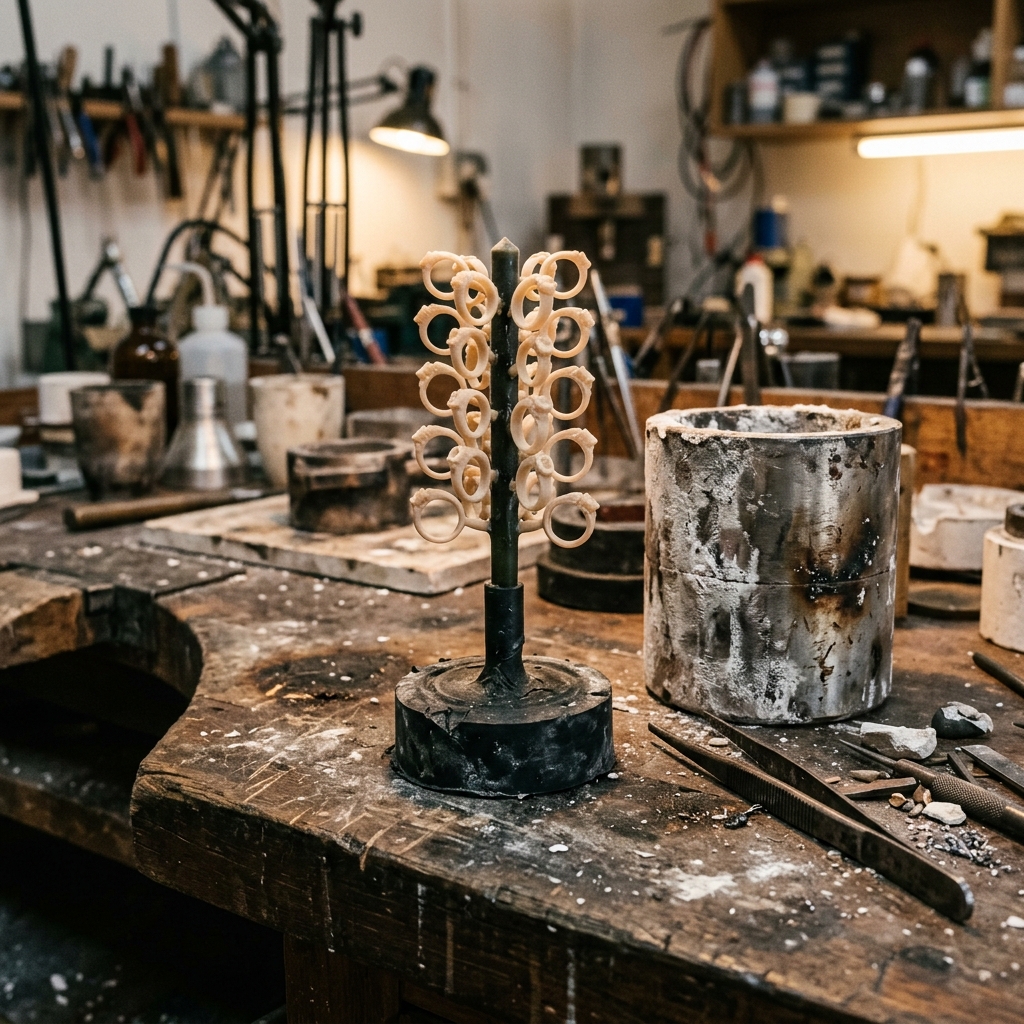
The process runs in three stages. A CAD model is prepared and printed as a castable pattern. The pattern is attached to a sprue tree, encased in investment plaster, and burned out in a kiln, leaving a hollow cavity. Molten metal is poured or vacuum-drawn into that cavity, the plaster is broken away, and the raw casting goes to the bench for cleanup, stone setting, and polish.
Formlabs documents this as a twelve-step workflow from CAD through washing, curing, sprueing, investing, burnout, casting, and finishing, and notes that shops can produce high-quality patterns within 24 hours. The pour itself is the fast part. The hours are in preparation and in the bench work afterward.
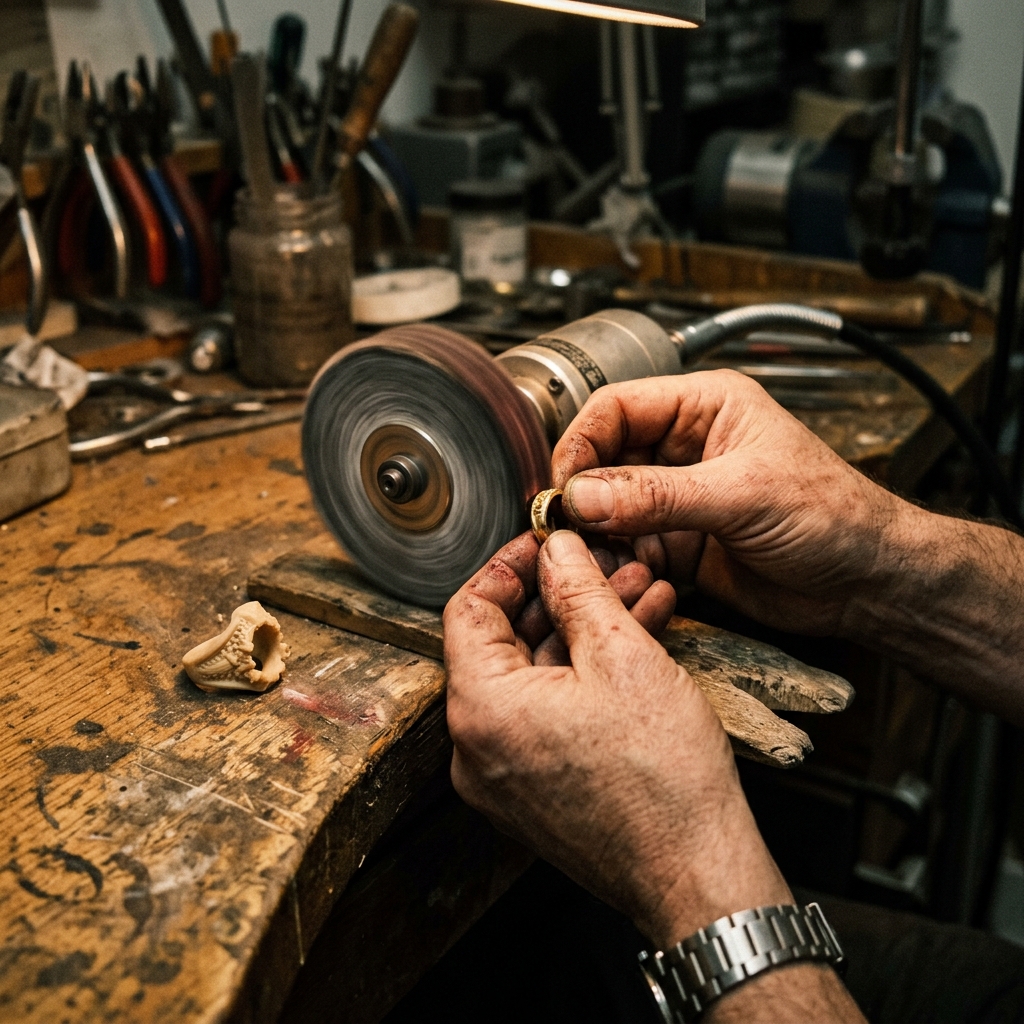
That last stage is worth naming plainly, because printing marketing tends to skip it. A casting comes out of the plaster rough, with sprue stubs and a dull surface. A jeweler still files, sets the stones, and polishes it. The printer removed the carving, not the craft.
What 3D Printing Changed for Custom Orders
The economics of one-off work flipped. Traditional custom meant a jeweler hand-carving a wax for hours before anyone knew whether the customer liked the shape. A printed pattern costs a few dollars of resin and a night of machine time, so a store can commit to a design after the customer approves it rather than gambling labor up front.
Speed followed. 3D Systems cites a jewelry startup fulfilling custom orders within 72 hours, and Formlabs describes digital workflows that drastically shortened the feedback loop between designer and customer. Custom stopped meaning "come back in six weeks."
The demand is waiting for it. De Beers' 2026 research found buyers increasingly want distinct pieces that feel personal, with non-bridal occasions now three quarters of US demand, and retailers told JCK that custom work is carrying 2026.
Does a Store Need Its Own 3D Printer?
No. A store needs two things to sell 3D printed custom jewelry: a way for customers to see and approve a design, and a production partner who prints and casts. Buying a printer solves neither, because the bottleneck is almost never the machine. It is the model that feeds it and the sale that justifies it.
The front of that chain is where most custom orders die. Someone has to turn "I want something like this, but with her birthstone" into a picture the customer says yes to. That used to require CAD skill, which we mapped in our guide to jewelry CAD software, and now starts with a design tool that renders a concept in seconds, covered in how AI jewelry design works. Only approved designs need a real model built.
The back of the chain is a sourcing question, not a capital one. Independent CAD designers build the production file and casting workshops print and pour it, which is what our designer studio marketplace and production network handle. A store that wants the whole path under its own brand can set up a store and start at the counter, where the order actually begins.