
For Store Owners
Best Jewelry Store Management Software in 2026: An Honest Guide
· 6 min read
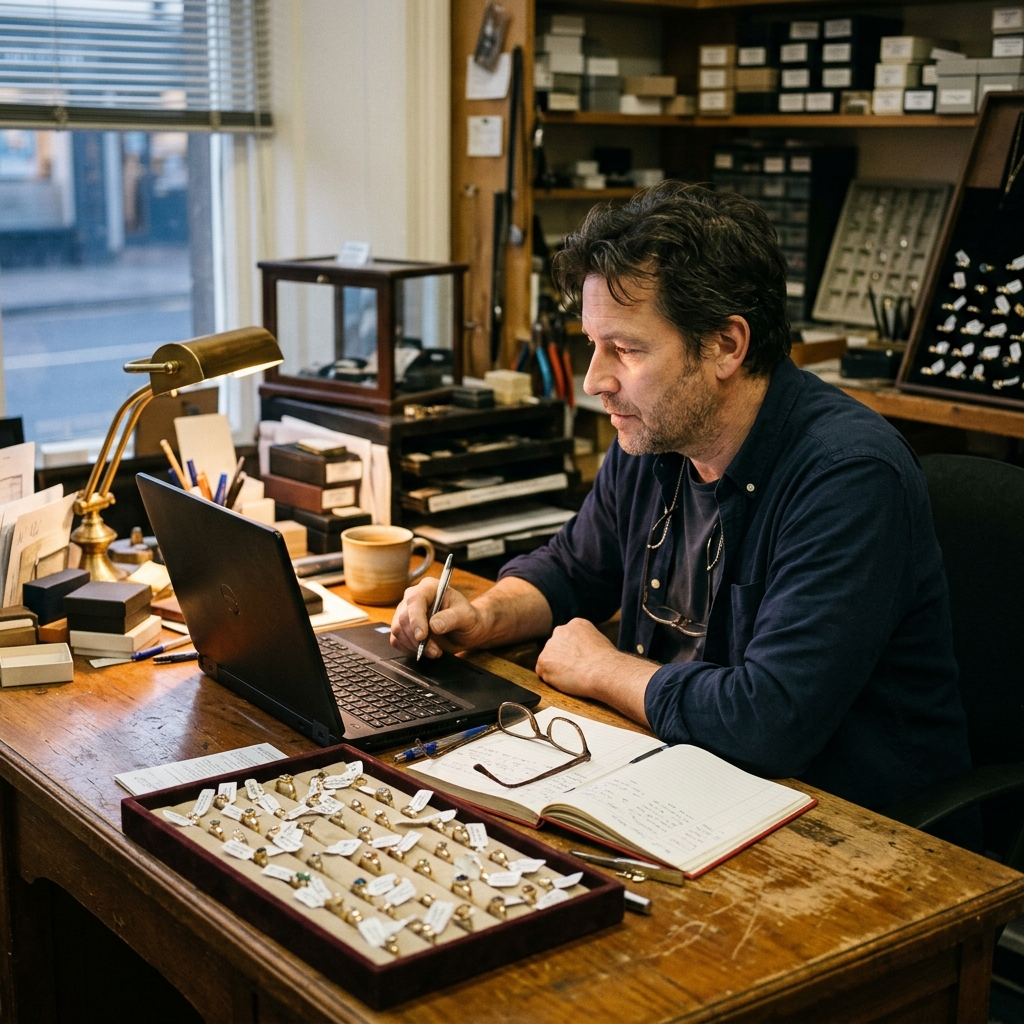
Every vendor on a search results page claims to be the best jewelry store management software, which tells you nothing. The honest answer is that jewelry store software splits into categories that do different jobs, and the right pick depends on which part of your business you are trying to grow.
This guide maps those categories, names the established players, and is upfront about where our own product fits and where it does not. Diamra is not a point of sale, and a point of sale is not a design tool. Knowing the difference saves you from paying twice for the wrong overlap.
What Does Jewelry Store Management Software Do?
Jewelry store management software is the system a store runs its daily operations on: point of sale, inventory with piece-level tags, repair and job tracking, customer records, and sales reporting. Most stores treat it as the system of record, and every other tool either feeds it or reads from it.
The term gets stretched, though. Jewelry management software can mean a POS, a production tracker, an appraisal tool, or an online sales manager, and vendors rarely say plainly which one they are. The categories below cover what an independent store actually meets when shopping.
The Established Systems: POS and Inventory First
The Edge is the long-standing name in jewelry POS. It runs on-premise, has been in stores for two decades, and goes deep on inventory and repair work orders. Its age shows in the stack: it lives on a computer in your store rather than in the cloud, which some owners consider a feature and others a ceiling.
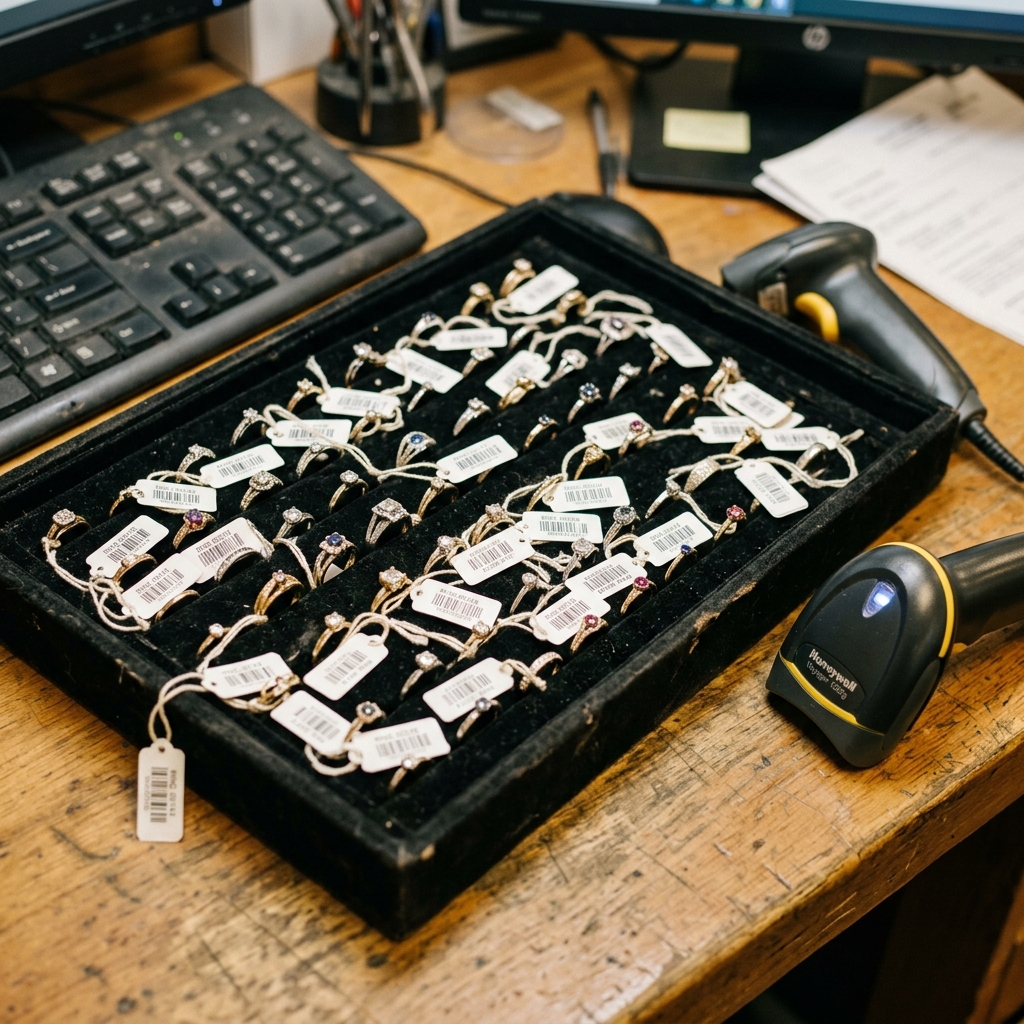
Jewel360 is the cloud generation of the same idea: POS, inventory, digital repair tracking with customer notifications, and remote access from any device. Newer systems in this group compete on cloud access and integrations rather than on jewelry depth, where the older systems still hold their own.
Around the system of record sit specialists. PIRO handles production and job-shop workflows for stores with a bench, Instappraise focuses on appraisals, and marketplace managers push inventory to online channels. Each does one job well, and none replaces the POS.
What the Established Systems Don't Do
Management software records business that already happened. A POS can tell you yesterday's sales and where every ring sits, but it cannot start a custom order: it has no way to turn a customer's idea into a design, a price, and a commitment. That gap matters more every year, because custom is where independents differentiate.
The demand side backs this up. De Beers' 2026 consumer research found shoppers increasingly want distinct pieces that feel personal, with non-bridal occasions now three quarters of US demand. Meanwhile average engagement ring spend fell to $4,600 in 2025 as lab-grown stones took 61% of center-stone choices. When margin per stone shrinks, the design experience has to earn the difference.
This is the category Diamra sits in: a design and custom-order layer that runs on your own branded site, where customers describe a piece, see it rendered, and submit a qualified order with a price estimate attached. It works alongside a POS, not instead of one. We covered the design side in how AI jewelry design works and the order side in custom orders without the back and forth. The full toolset is on the why Diamra page.

How Should a Store Choose in 2026?
Choose by the revenue you want to grow, not by feature count. If daily operations are the bottleneck, a modern cloud POS is the answer. If your bench is drowning in job tracking, look at production tools. If you want more custom orders, no system of record will create them, and you need a tool that starts orders rather than files them.
Two checks help. First, ask what the software changes about how customers reach you: retailers told JCK that experiences and custom work, not promotions, are carrying 2026, and Deloitte's research finds most companies get productivity gains from new tools but only a third change how they actually operate. Second, check the buying math: pricing you can leave without a forklift migration beats a big license fee that locks you in. Diamra's pricing is monthly for that reason.
Whatever you pick as a system of record, make sure something on your website answers the customer who is ready to design. Buyers increasingly research through AI assistants, and National Jeweler advises jewelers to publish content that answers real customer questions to show up in those results. That is the difference between software that documents your store and software that grows it. If you want to see the second kind, our post on giving customers a way to design their own jewelry is the place to start.