
For Store Owners
How to Sell Handmade Jewelry Online (Without Losing the Margin)
· 6 min read
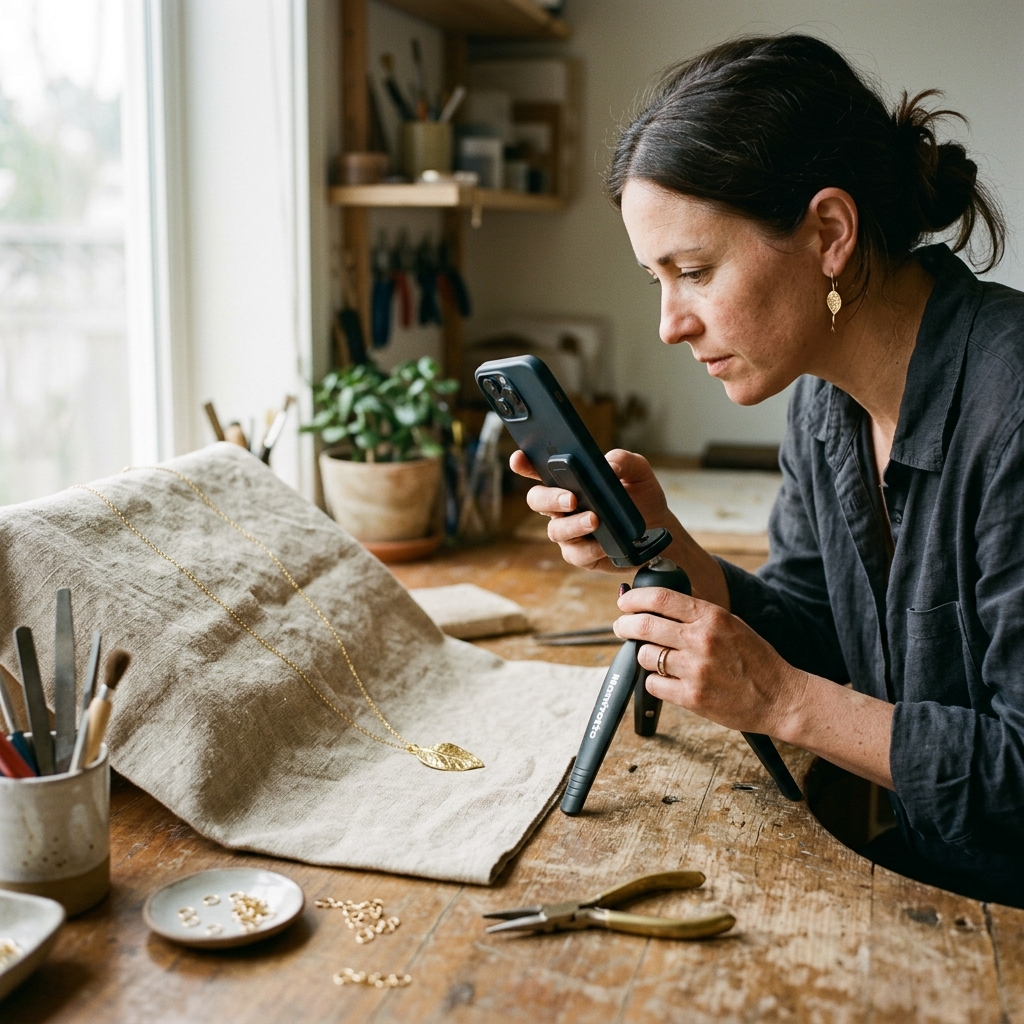
Most advice on how to sell handmade jewelry online starts and ends with opening an Etsy shop. That works for a first sale, and it quietly caps everything after it. The marketplace owns the customer, sets the fees, and surrounds your work with ten thousand lookalikes.
This guide covers the three real routes, what each one costs, and the pricing math most makers skip until it hurts. The short version: marketplaces are a discovery channel, not a business. The margin lives on ground you own.
Where Can You Sell Handmade Jewelry Online?
There are three routes to sell handmade jewelry online: marketplaces like Etsy and Amazon Handmade, social storefronts on Instagram and TikTok, and your own website. Marketplaces bring traffic and take fees plus the customer relationship. Social brings reach and takes constant content. Your own site brings margin and requires you to earn the visit.
Successful makers usually run two of the three at once: a marketplace or social presence for discovery, and their own site as the place serious buyers land. The mistake is treating the discovery channel as the whole business.
What Marketplaces Really Cost
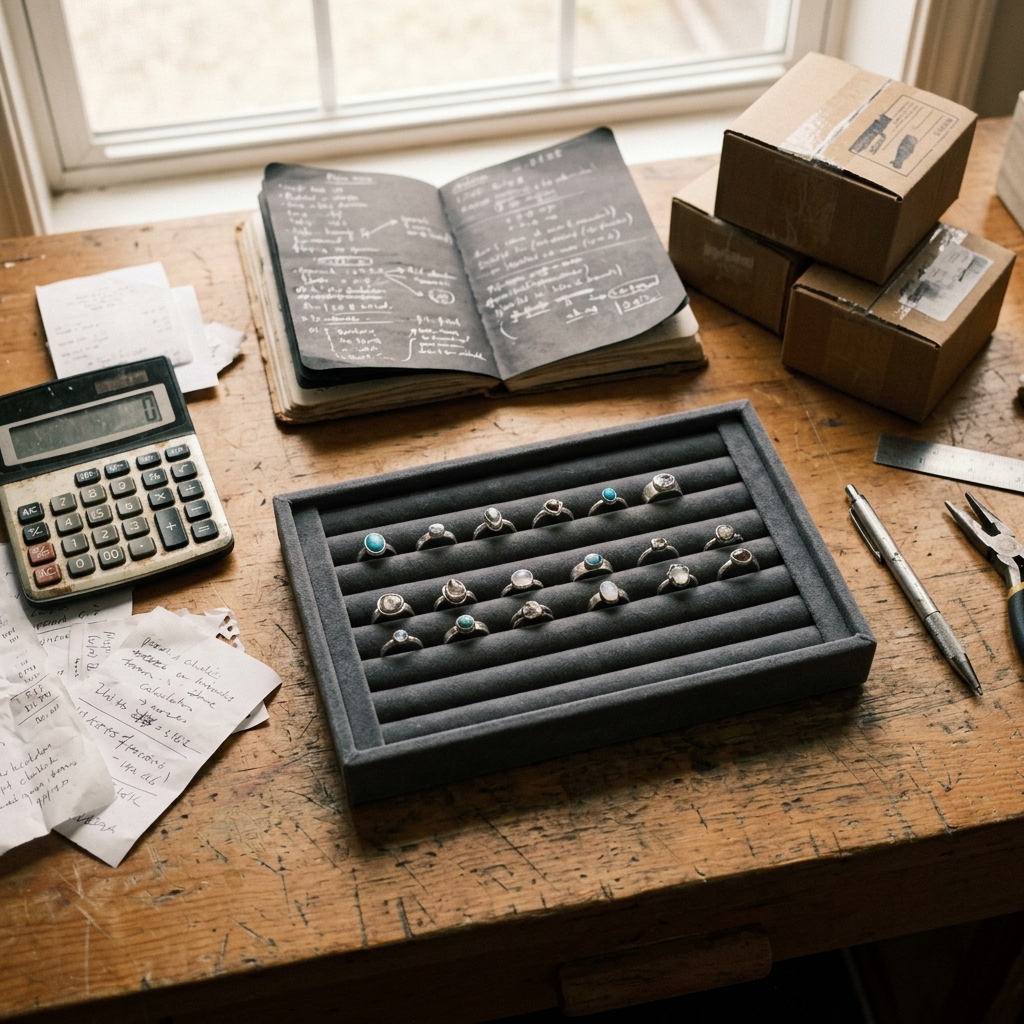
The listed fees look small until they stack. On Etsy, a US sale carries a $0.20 listing fee, a 6.5% transaction fee on price plus shipping, and payment processing at 3% plus $0.25. If the sale came through an offsite ad, add 12 to 15%. Printful's fee breakdown puts the realistic total at around 20 to 25% of the sale price once the mandatory fees compound.
On a $180 handmade necklace, that is $35 to $45 gone before materials. Gold, stones, and findings do not care what platform you sold on. And the deeper cost is invisible: the buyer is Etsy's customer, not yours. No email address, no repeat-purchase relationship, and an algorithm change can empty your shop overnight.
None of this makes marketplaces bad. It makes them expensive rented ground, which is a fine place to be found and a bad place to build.
How to Sell Jewelry Online Successfully
Selling jewelry online successfully comes down to three moves: own a channel where the customer relationship belongs to you, sell distinct pieces rather than lookalikes, and publish content that answers what buyers actually search. Makers who do all three keep the margin that marketplaces and ad platforms otherwise absorb.
The demand data points the same direction. De Beers' 2026 consumer research found buyers increasingly want distinct pieces that feel personal, with non-bridal occasions now three quarters of US demand. And retailers told JCK that custom work and experiences, not promotions, are carrying 2026. Personal and distinct is exactly what a handmade maker sells that a mass listing cannot.
The practical steps are smaller than they sound: a simple site with your pieces, honest photography, and pages that answer real questions about materials, sizing, and timelines. We wrote about turning that interest into orders in growing custom sales without spending more on marketing.
Fine Jewelry and Custom Work: The Margin Is Made to Order
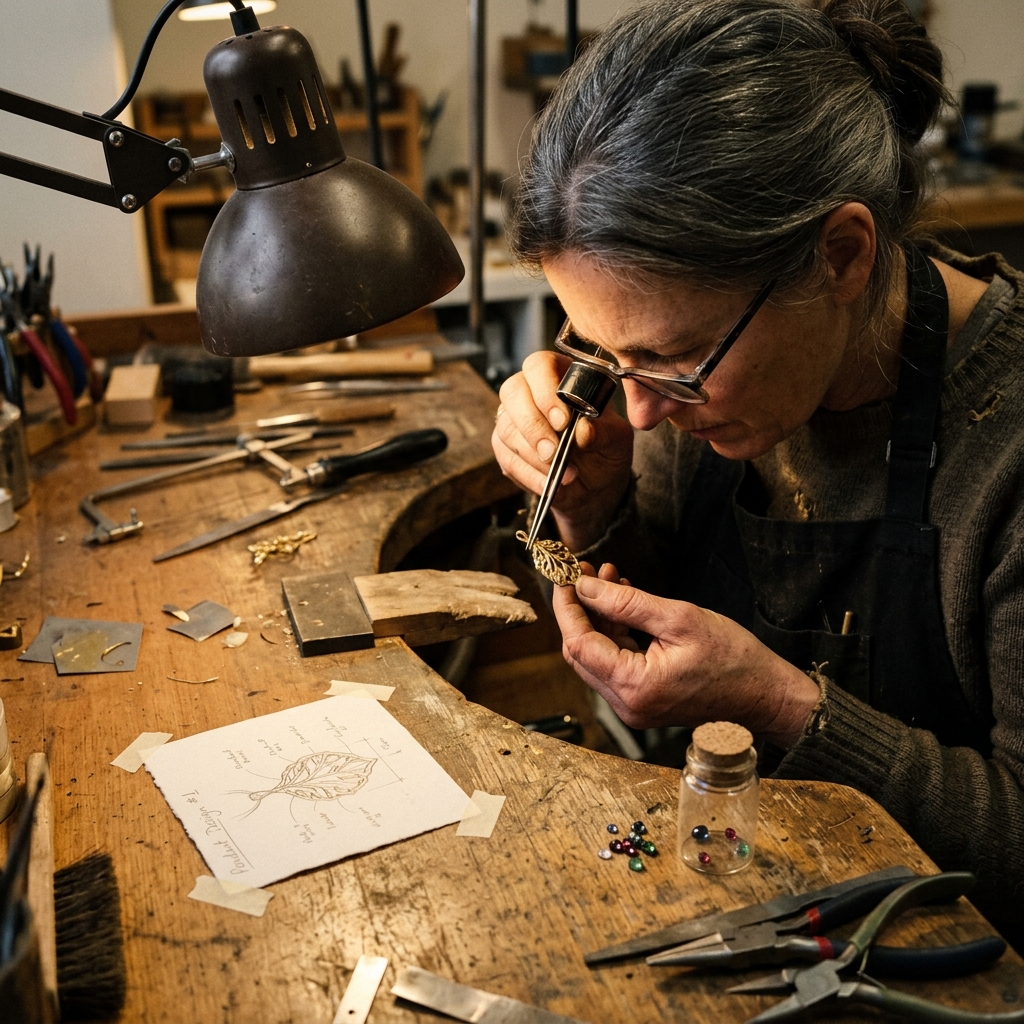
For makers working in gold and stones, the best online sale is often one that does not exist yet. Ready-made fine pieces compete on price against a market where lab-grown stones took 61% of engagement center-stone choices in 2025, but a commissioned piece is priced on the work, not the listing next to it. Custom is where handmade stops competing with manufactured.
The hard part of custom has always been the back and forth: sketches, revisions, quotes. That is exactly what has gotten cheap. Jewelers already use AI tools for renders, product copy, and admin work, and a design tool on your own site lets a buyer describe a piece, see it rendered, and submit a real request with a price attached. We explain the mechanics in how AI jewelry design works and the customer side in giving customers a way to design their own jewelry.
That is the model Diamra runs: your own branded jewelry site with a design studio built in, so the customer who found you on a marketplace or a feed lands somewhere you own and starts an order there. You can set up a store under your own name and keep the relationship, the data, and the margin.